42 / 15-23 Langhorne Street, First Floor HUB Arcade, Dandenong VIC 3175
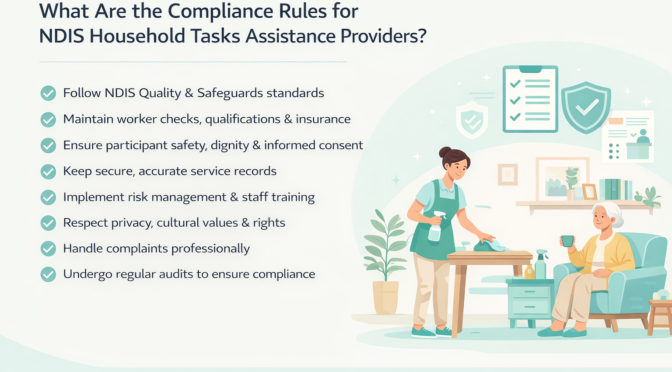
Providing support services through the NDIS requires strict adherence to compliance rules. Household tasks assistance providers must understand regulations protecting participants. Quality standards ensure safe, dignified, and person-centred care delivery. This guide breaks down essential compliance requirements into simple, actionable information.
Understanding NDIS Compliance Fundamentals
NDIS service in Melbourne and across regions must follow comprehensive compliance frameworks. Providers must meet quality and safety standards established by the NDIS. Compliance protects vulnerable participants from harm. Non-compliance can result in serious consequences for providers.

The NDIS Quality and Safeguarding Commission oversees provider accountability. Providers must implement documentation systems to track all support delivered. Regular audits ensure ongoing compliance with regulations. Participants have rights that providers must respect and protect.
Key Compliance Requirements for Providers
Core Compliance Areas
- Maintain appropriate qualifications and credentials for support workers.
- Complete police checks and working with children checks regularly.
- Obtain proper insurance coverage for all services delivered.
- Keep detailed service records and participant information securely.
- Ensure confidentiality and privacy of all participant data.
Quality and Safeguarding Standards
NDIS support services in Melbourne must prioritise participant safety above all else. Providers must implement risk management systems to identify potential hazards. Staff training on safeguarding practices is mandatory and ongoing. Participants should feel secure when receiving assistance with tasks.
Providers must have complaint-handling procedures in place for feedback. Issues must be addressed promptly and professionally. Documentation of complaints protects both participants and providers. Regular quality audits assess compliance with safety standards.
Participant Rights and Dignity
NDIS household task in Melbourne assistance must respect participant autonomy and choices. Providers must obtain informed consent before commencing any support. Participants control decisions about their own care and support. Workers must maintain professional boundaries at all times.
Support should be delivered with respect for individual cultural values and preferences. Participants have rights to dignity, privacy, and fair treatment. Discrimination or mistreatment is strictly prohibited under regulations. Workers must complete cultural competency training regularly.
Documentation and Record-Keeping
Household tasks assistance in Melbourne requires comprehensive record-keeping practices. Providers must document all services provided to participants. Records include time spent, tasks completed, and any concerns noted. Documentation must be accurate, timely, and stored securely.
Records are essential for quality assurance and regulatory audits. Participants have rights to access their own service records. Confidentiality laws govern how records are stored and shared. Digital systems must have appropriate data protection measures.
Conclusion
Compliance with NDIS regulations ensures quality service delivery and participant protection. Providers who understand and follow these rules build trust with participants. Regular training and updates keep staff informed of changing requirements.
Need expert NDIS support guidance? Inclusive Futures Network specialises in helping providers meet compliance standards. Our experienced team provides training, consultation, and ongoing support.
- Phone: 0403 545 467 or 0455 983 963
- Email: info@inclusivendisprograms.com.au
- Website: https://inclusivendisprograms.com.au/
Contact us today for personalised compliance support and training solutions!
— — — — — — — — — — — — — — — — — — — — — — — — — — — — — — — — — — — — — — — — — — — — — — — — — — — — — — — — — — — —
Frequently Asked Questions
1. What qualifications must household tasks assistance workers have?
Workers should have relevant training in disability support and first aid. While specific certifications vary, providers must ensure workers are competent. Ongoing professional development is required for all staff members.
2. How often must providers undergo compliance audits?
The NDIS conducts audits based on risk assessments and complaints. Most providers undergo audits annually or biannually. Providers should maintain readiness for surprise audits at any time.
3. What happens if a provider fails a compliance audit?
Failed audits may result in corrective action plans or penalties. Serious breaches can lead to provider deregistration. Participants may seek alternative providers if concerns aren’t resolved.
4. Are background checks mandatory for all staff members?
Yes, police checks and working with children checks are mandatory. Checks must be renewed regularly according to regulations. Certain criminal records may prevent employment in support roles.
5. How should providers handle participant complaints?
Complaints must be documented and investigated promptly. Providers should respond within agreed timeframes. Records of complaints and resolutions must be maintained for quality assurance purposes.
6. What insurance coverage do household tasks providers need?
Providers must have adequate liability insurance and professional indemnity coverage. Insurance requirements depend on services provided. Participants should have proof of provider insurance before commencing support.
7. Can providers refuse to work with certain participants?
Providers cannot discriminate based on disability or characteristics. Refusal must be based on genuine safety concerns or service mismatch. Reasons for refusal must be documented and communicated respectfully.
8. How long must providers keep participant records?
Documentation standards require retention for minimum periods specified by NDIS. Generally, records should be kept for 7 years after service ends. Secure storage and data protection are mandatory throughout.
9. What should providers do if safeguarding concerns arise?
All safeguarding concerns must be reported immediately to the authorities. Providers should have clear reporting procedures in place. Failure to report suspected abuse is a serious compliance breach.
10. How can providers stay updated on compliance changes?
Subscribe to NDIS official communications and updates. Attend professional development training regularly. Connect with industry bodies that provide compliance guidance and resources.