Tag Archives: Inclusive Futures Network – NDIS Programs

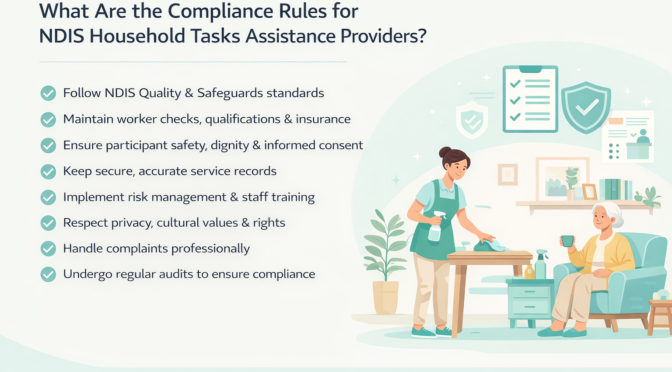
What Are the Compliance Rules for NDIS Household Tasks Assistance Providers?

Providing support services through the NDIS requires strict adherence to compliance rules. Household tasks assistance providers must understand regulations protecting participants. Quality standards ensure safe, dignified, and person-centred care delivery. This guide breaks down essential compliance requirements into simple, actionable information.

Understanding NDIS Compliance Fundamentals

NDIS service in Melbourne and across regions must follow comprehensive compliance frameworks. Providers must meet quality and safety standards established by the NDIS. Compliance protects vulnerable participants from harm. Non-compliance can result in serious consequences for providers.

The NDIS Quality and Safeguarding Commission oversees provider accountability. Providers must implement documentation systems to track all support delivered. Regular audits ensure ongoing compliance with regulations. Participants have rights that providers must respect and protect.

Key Compliance Requirements for Providers

Core Compliance Areas

  • Maintain appropriate qualifications and credentials for support workers.
  • Complete police checks and working with children checks regularly.
  • Obtain proper insurance coverage for all services delivered.
  • Keep detailed service records and participant information securely.
  • Ensure confidentiality and privacy of all participant data.

Quality and Safeguarding Standards

NDIS support services in Melbourne must prioritise participant safety above all else. Providers must implement risk management systems to identify potential hazards. Staff training on safeguarding practices is mandatory and ongoing. Participants should feel secure when receiving assistance with tasks.

Providers must have complaint-handling procedures in place for feedback. Issues must be addressed promptly and professionally. Documentation of complaints protects both participants and providers. Regular quality audits assess compliance with safety standards.

Participant Rights and Dignity

NDIS household task in Melbourne assistance must respect participant autonomy and choices. Providers must obtain informed consent before commencing any support. Participants control decisions about their own care and support. Workers must maintain professional boundaries at all times.

Support should be delivered with respect for individual cultural values and preferences. Participants have rights to dignity, privacy, and fair treatment. Discrimination or mistreatment is strictly prohibited under regulations. Workers must complete cultural competency training regularly.

Documentation and Record-Keeping

Household tasks assistance in Melbourne requires comprehensive record-keeping practices. Providers must document all services provided to participants. Records include time spent, tasks completed, and any concerns noted. Documentation must be accurate, timely, and stored securely.

Records are essential for quality assurance and regulatory audits. Participants have rights to access their own service records. Confidentiality laws govern how records are stored and shared. Digital systems must have appropriate data protection measures.

Conclusion

Compliance with NDIS regulations ensures quality service delivery and participant protection. Providers who understand and follow these rules build trust with participants. Regular training and updates keep staff informed of changing requirements.

Need expert NDIS support guidance? Inclusive Futures Network specialises in helping providers meet compliance standards. Our experienced team provides training, consultation, and ongoing support.

Contact us today for personalised compliance support and training solutions!

— — — — — — — — — — — — — — — — — — — — — — — — — — — — — — — — — — — — — — — — — — — — — — — — — — — — — — — — — — — —

Frequently Asked Questions

1. What qualifications must household tasks assistance workers have?

Workers should have relevant training in disability support and first aid. While specific certifications vary, providers must ensure workers are competent. Ongoing professional development is required for all staff members.

2. How often must providers undergo compliance audits?

The NDIS conducts audits based on risk assessments and complaints. Most providers undergo audits annually or biannually. Providers should maintain readiness for surprise audits at any time.

3. What happens if a provider fails a compliance audit?

Failed audits may result in corrective action plans or penalties. Serious breaches can lead to provider deregistration. Participants may seek alternative providers if concerns aren’t resolved.

4. Are background checks mandatory for all staff members?

Yes, police checks and working with children checks are mandatory. Checks must be renewed regularly according to regulations. Certain criminal records may prevent employment in support roles.

5. How should providers handle participant complaints?

Complaints must be documented and investigated promptly. Providers should respond within agreed timeframes. Records of complaints and resolutions must be maintained for quality assurance purposes.

6. What insurance coverage do household tasks providers need?

Providers must have adequate liability insurance and professional indemnity coverage. Insurance requirements depend on services provided. Participants should have proof of provider insurance before commencing support.

7. Can providers refuse to work with certain participants?

Providers cannot discriminate based on disability or characteristics. Refusal must be based on genuine safety concerns or service mismatch. Reasons for refusal must be documented and communicated respectfully.

8. How long must providers keep participant records?

Documentation standards require retention for minimum periods specified by NDIS. Generally, records should be kept for 7 years after service ends. Secure storage and data protection are mandatory throughout.

9. What should providers do if safeguarding concerns arise?

All safeguarding concerns must be reported immediately to the authorities. Providers should have clear reporting procedures in place. Failure to report suspected abuse is a serious compliance breach.

10. How can providers stay updated on compliance changes?

Subscribe to NDIS official communications and updates. Attend professional development training regularly. Connect with industry bodies that provide compliance guidance and resources.


How Can You Improve Goal Achievement with Support Coordination?

Support planning can help you reach your goals more easily, which can change how you use the National Disability Insurance Scheme. Support planning helps people connect with services, keep track of their goals, and become more independent. For better results, you need to know how it strengthens your planning and execution approach.

This blog talks about useful ways to help NDIS support coordination in Melbourne work better for you.

What Does Support Coordination Mean?

Support coordination in Dandenong helps people with the NDIS understand and use their plan well. It puts you in touch with the right mobility support services so that your goals are attainable. This service also helps you learn skills that will help you become more independent and involved in your community.

NDIS Support Coordination session with participant in a wheelchair

How Support Coordination Helps You Reach Your Goals?

  • Makes Your Goals Clear: Support managers help you set clear, attainable goals that are in line with your needs and goals. Clear goals help you find your way and keep you going.
  • Makes It Easier To Get To Services: It can be hard to find NDIS companies. Coordinators find the best tools to meet the goals of your plan, which saves you time and stress.
  • Helps You Do More: Support planning helps people learn the skills they need to handle problems on their own. This method helps people feel good about the choices they make.
  • Checking on Progress: Review meetings on a regular basis will help your goals stay relevant. Coordinators change plans when things change or when people’s needs change.

How to Get the Most Out of Support Coordination?

  • Stay Engaged: Talk to your coordinator often about any changes in your wants or preferences. In this way, your plan stays open.
  • Keep Track Of Your Progress: To keep track of goals and obstacles, keep a simple journal or digital record.
  • Ask for Feedback: To make your experience better, ask support workers and coordinators for comments all the time.
  • Use Resources In Your Community: Add local social, educational, or leisure programmes to your plan to make it better.

Why Should You Pick a Qualified Coordinator?

A good coordinator knows a lot about how the NDIS works and how to connect people in the community. The more experience they have, the easier it will be to reach their goals.

If you’re looking into NDIS support coordination in Noble Park, their coordinators will help you find options that fit your needs. Support Coordination and other services offer focused support to people who want it, helping participants handle complicated plans.

Inclusive Futures Network— NDIS Programs is the name you trust when it comes to expert and qualified NDIS support coordination in Melbourne. We specialise in personalising tasks and support services for you, so you feel empowered. Our support coordination services help you navigate your NDIS plans and maximise their benefits. Call 0403 545 467 for a free consultation.

FAQs

How Often Should I Catch Up With My Support Person?

Ideally, every few months or when there are big changes to the plan.

Can Coordinating Support Help With Choices About Funding?

Coordinators help you, but they don’t decide how to spend your money.

Do NDIS Users Have To Use Support Coordination?

No, it’s not required, but it will help your plan work better if you do.

How does NDIS Daily Personal Activities Support Participants?

For individuals living with disabilities, one of the most challenging things to do is complete their personal chores, like bathing, toileting, grooming, etc. This can often make one feel dependent and limited. NDIS (National Disability Insurance Scheme) in Australia can help turn your limitations into opportunities. Their central aim is to support independence and enhance the quality of living for participants.

We have discussed their primary role in delivering quality assistance for daily personal activities NDIS in Dandenong. Here’s how they support and empower participants for a more autonomous life–

NDIS daily personal care support in Melbourne

Understanding NDIS Assistance With Daily Personal Tasks

Support for NDIS Daily Personal Activities helps with daily activities that a participant may find difficult because of their handicap. Showering, dressing, grooming, eating, and other self-care tasks are examples of everyday living and personal care activities that most individuals may take for granted.

This support is given to participants in order to either assist them in completing these tasks or to allow them to do so on their own, perhaps with guidance or encouragement. The goal is to support individuals in preserving their health and sense of self-worth while fostering their independence as much as feasible.

What Are The Services Offered?

Under daily personal activities NDIS in Noble Park, providers can assist participants with a variety of tasks. These include:

  • Showering, washing, and bathing
  • Toileting
  • Dressing and undressing
  • Continence management
  • Medication management
  • Support for easy mobility and transferring places

Assistance with daily personal activities NDIS participants in Melbourne

How Does This Support Participants?

Encouraging Self-reliance and Self-assurance

The ability to acquire and maintain self-care skills is one of the main advantages of Daily Personal Activities support. This support increases self-esteem and facilitates living a more independent life, whether it is through learning new methods to dress on one’s own or getting assistance with personal hygiene.

Improving Well-Being and Health

Participants may securely manage their prescriptions, maintain hygienic standards, and meet their dietary needs when they receive regular help with personal care duties. These resources lower the chance of health issues and improve both mental and physical health.

Providing Person-centred and Flexible Care

The NDIS acknowledges that every participant’s requirements and circumstances are distinct. Support for daily personal activities is tailored to each person’s objectives, tastes, and way of life. This adaptability guarantees that the assistance is courteous and efficient, changing to meet the participant’s changing demands.

Providing Support to Families and Carers

Many participants receive daily support from family members or carers. By authorising compensated support, financing for daily personal activities can help ease some of this strain, providing families with a break and preventing carer burnout.

Therefore, assistance with NDIS daily personal activities in Melbourne is designed to assist participants in enhancing their independence while still getting the support they need. NDIS aims to alleviate the challenges of individuals with personalised, compassionate, and comprehensive care.

If you’re on the hunt for reliable providers who can assist you with NDIS daily personal activities in Melbourne, turn to Inclusive Futures Network — NDIS Programs. We’re one step away from empowering you and delivering more than you expect. Call us at 0403 545 467 and book a consultation today!

FAQs

Who Is Eligible for Personal Care Assistance?

Whoever is unable to carry on their daily tasks due to an impairment, illness, or old age can access daily personal care assistance services through the NDIS.

Can I Choose My Own Provider For the Program?

Yes! NDIS gives you the liberty to choose your own provider depending on your needs and preferences.

What Is The Impact of Support Coordination on Long-Term Wellbeing?

Navigating the NDIS can often feel overwhelming for the participants and their families. Support coordination simplified the process by providing expert guidance, personalised planning and effective advocacy. It provides a long-term framework for growth, independence and well-being beyond helping participants manage their NDIS plans. Support coordination has a lasting impact on overall quality of life by connecting individuals with the right services, building essential skills and fostering greater confidence. This blog delve into the crucial role that what is the impact of support coordination on long-term wellbeing.

Understanding the Role of Support Coordination

Support coordination in Melbourne is considered to be a specialised service designed to assist NDIS participants in understanding, implementing and maximising their plans. A support coordinator helps individuals with:

  • Identify the most suitable providers for their unique needs
  • Build the capacity to manage services independently.
  • Strengthen decision-making skills and self-advocacy.
  • Establish networks that enhance daily living and long-term independence

The participants gain clarity and also develop a pathway to sustained wellbeing through these supports.

Expert Support Coordination Melbourne providers

Long-Term Benefits of Support Coordination

Building Independence and Support Coordination

The key objectives of support coordination in Dandenong are to empower participants to take charge of their lives. Coordinators encourage independence by teaching individuals how to manage appointments, budgets and services. This confidence translates into better decision-making and improved self-esteem, which are critical for long-term well-being.

Accessing the Right Services at the Right Time

Support coordination ensures participants are linked with appropriate services that match their goals. Having the right services leads to improved outcomes over time, whether it is therapy, employment support or community programs. The participants experience greater stability and peace of mind with consistent access to quality care.

Reducing Stress for Families and Carers

Families often bear the emotional and practical weight of managing care. Support coordination eases this burden by guiding the process and handling complexities within the NDIS. They can focus more on creating supportive and nurturing environments for their loved ones when families have less stress.

How Support Coordination Enhances Long-Term Wellbeing?

Support coordination contributes to lasting wellbeing in different important ways:

  • Skill Development: Equipping participants with life skills that foster independence.
  • Stability: Creating a reliable network to ensure continuity of care.
  • Choice and Control: Helping participants make some informed decisions that align with their goals.
  • Resilience: Building confidence to adapt to changes in services or personal circumstances.

These outcomes are not short-lived but instead create a foundation for healthier and more fulfilling lives.

The Holistic Impact of Support Coordination

Support coordination goes beyond the immediate goal of implementing the NDIS plans. It nurtures the participant’s emotional, social and physical well-being by focusing on long-term growth. The individuals can:

  • Strengthen community connections
  • Pursue education, employment or volunteering opportunities
  • Maintain better mental health through structured and supportive care

Supportive coordination in Hampton Park creates a ripple effect that benefits not only participants but also their families, caregivers and wider communities.

Reliable Support Coordination Melbourne for NDIS participants

Support coordination is a powerful tool for enhancing long-term well-being. It lays the foundation for a more confident and fulfilling life by fostering independence, connecting participants with the right services and providing emotional and practical support. The true impact of support coordination lies in its ability to create sustainable, positive changes that empower individuals to thrive well into the future. Engaging a support coordinator can make all the difference for those looking to maximise the benefits of their NDIS plans and ensure that their support network aligns with their aspirations.

Book An Appointment Today

If you would like to get started with supported coordination through Inclusive Futures Network — NDIS Programs or have any related questions, please give us a call at 0403 545 467 or email us at info@inclusivendisprograms.com.au.

FAQs

How does support coordination improve long-term well-being?

Support coordination improves long-term wellbeing by helping NDIS participants build independence, access the right services and develop the skills needed for daily living. This structured support leads to greater confidence, stability and overall quality of life.

What specific skills can participants gain through support coordination?

Participants can develop vital skills such as managing appointments, budgeting NDIS funding, decision-making, and self-advocacy. These skills not only foster independence but also contribute to long-term resilience and well-being.

Can support coordination reduce stress for families and carers?

Yes. Support Coordination eases the burden on families and carers by managing service connections, clarifying NDIS processes, and handling plan complexities. This reduces stress and allows families to focus on providing emotional support and care.

Questions to Ask Before Choosing an SIL Provider

When it comes to hiring Supported Independent Living (SIL) services, you need to find the right providers who can guide you to a suitable accommodation. SIL Services is all about retaining your independence while still receiving support. This is when you need a provider who understands your needs and specific goals.

Melbourne SIL Providers helping NDIS participants gain independence

Here is a set of questions you must ask your SIL providers in Melbourne before you hire them:

What Kinds of Assistance Are Offered?

Start by outlining the variety of available supports. While some providers may be able to help with skill development, community involvement, or overnight support, others may only help with everyday living tasks like cooking and personal hygiene. Make sure the enquiries are tailored to your specific assistance needs and ask for concrete examples.

Are Supports Customised to Meet Personal Objectives?

Every person has a different route. It’s critical to learn how the provider tailors services to the objectives and preferences of participants. Give instances of how the provider has helped people follow their interests or become more self-reliant.

Personalised SIL housing services in Melbourne

What Are Support Workers’ Experiences and Qualifications?

It’s critical to know who will be helping you. Enquire about the hiring procedure, required qualifications, and staff experience with your kind of assistance needs. To determine compatibility, ask about staff ratios and if you can meet with employees beforehand.

How Does the Provider Manage and Train Employees?

A qualified provider will have ongoing training. Enquire about initial and recurrent training covering topics like medication management, first aid, positive behaviour support, and cultural competency. Examine the procedures for employee supervision, feedback, and improvement plans as well.

Does the Provider Promote Control and Choice?

The best SIL providers in Springvale give you the ability to take charge of your life. Find out whether you will be able to choose your housemates, support staff, and daily schedule. Ask yourself how your routines or supports are handled when they are altered.

How Does the Provider Handle Dignity and Privacy?

Respect for dignity and privacy ought to be unassailable. Find out how your privacy is protected in shared living situations, how personal information is shared and saved, and what safeguards are in place to guarantee that your dignity is upheld in daily assistance.

How Do I File a Complaint or Offer Feedback?

A competent provider actively looks for input. Find out how complaints are resolved, how feedback is obtained, and whether participants have any say in how services are provided. A good experience depends on knowing your rights and how receptive the provider is to criticism.

How Do SIL Fees Get Determined?

Make clear what is covered by your NDIS plan and what is included in your SIL quote. Future financial strain can be avoided by being open and honest about fees, inclusions, and potential out-of-pocket costs.

What Takes Place If My Needs Shift?

Find out if the assistance arrangements are flexible. How does the provider respond to a move to a different property or shifting needs? A responsive provider should be able to support your transitions and make quick adjustments.

Supported Independent Living Melbourne - NDIS Approved Providers

Finding SIL providers in Oakleigh who are on your path to wellbeing and independence is the goal of your NDIS plans. In addition to protecting your rights, asking the correct questions guarantees that you get the individualised, considerate assistance you need to create the greatest possible life in Australia.

Hire Reputed and Reliable Providers!

If you’re on the hunt for reliable and trusted SIL providers in Melbourne, turn to Inclusive Futures Network — NDIS Programs. We specialise in tailoring services to meet the needs of participants and people living with disabilities. Talk to our expert providers and discuss your needs with us. Dial 0403 545 467 for a free consultation.

How Does Community Participation Empower Participants’ Lives?

Participation in the NDIS community guarantees that individuals with disabilities enjoy fulfilling and empowered lives, to start with! Promoting social integration, boosting self-esteem, and creating chances to participate in a variety of activities that best suit a person’s interests and objectives are primary objectives of this core support plan under the NDIS. On this page, explore the way in which innovative community participation empowers participants’ lives.

It Assists Participants Engage in Activities Within Their Respective Communities:

Support workers assisting with NDIS community participation in Melbourne like anywhere else enable participants to take active part in disability group activities while building on peers who share their interests and experiences in a safe and supportive setting. Some of the instances of such activities include workshops for arts and crafts, music therapy sessions, and other group activities like cooking lessons are examples. Participating in group activities fosters the development of new skills and self-confidence.

A painting lesson, for instance, encourages creativity. To promote socialisation, there are constantly opportunities to engage with other people. In a similar vein, a group exercise class can foster friendship and improve participants’ health.

Inclusive NDIS community participation group activity
NDIS community participation

It Helps Support Recipients Take Part in Community Events

When experts assist participants with social community participation in Dandenong or elsewhere, it opens the window of opportunity for participants to gain access to local events such as festivals, cultural programs, athletic events, and educational seminars. Participants get to learn new social, interactive skills, develop new interests, and feel more connected to their community from these events.

Movie evenings and gardening classes are a few more examples of accessible local events that are typically organised in the neighbourhood community centres and are open to anyone. The program centres on a topic that people may find interesting.

It Helps Participants Gain Self-Sufficiency Through Volunteering

Volunteering is a great opportunity for NDIS participants to gain independence in life and live the life of their choice in their own terms. Volunteering in animal shelters, charitable organisations in local communities, or environmental conservation initiatives are all excellent examples of volunteer work.

These encounters boost self-esteem and confidence while offering a setting for skill development that could result in future employment. Volunteering enhances the experience for all participants by fostering a sense of purpose and belonging.

People With Disabilities Can Take Part in Recreational Activities

Swimming, hiking, and participating in local sports teams are some of the greatest ways to keep active and enjoy the outdoors. These exercises can be modified to accommodate different tastes and skill levels, making participation comfortable for participants who are being taken care of by disability services & support organisations.

Participants may employ specialised programs or adaptive equipment with NDIS community involvement support, making recreational activities a reality. For instance, because they are unable to move around on cycle tracks, they have adaptive cycling that adjusts to participants with better body movement.

Apart from all these, participants can join sports and other clubs, social groups, travel for exploring new places, attend various disability advocacy programs, establish social relationships through various mentorship programs. Last but not the least, they can achieve their personal goals in life.

So if you are an NDIS participant, looking forward to leading a socially inclusive and interactive life, get in touch with Inclusive Futures Network — NDIS Programs for assistance with community participation. Call us at 0403 545 467 for an appointment with our experts.

Things the NDIS Looks at Before Adding Transport Support to a Plan

Among all the NDIS supports available, NDIS transport assistance in Melbourne is among the most sought-after support. For participants with limited mobility, this is a godsend. With this support, your loved ones can access the community, attend education facilities, go to work, enjoy local events and meet families & friends. This makes travel & transport assistance an absolute necessity for most participants.

But travel support funding doesn’t automatically get included in an NDIS plan. The NDIA (National Disability Insurance Agency) takes into consideration several factors before adding NDIS travel assistance in Noble Park to your plan. Understanding what goes behind this process is crucial for primary carers and family members of the participants to prepare accordingly.

Nature of Disability for Transport Assistance

The first thing that NDIA considers is whether a participant’s limited mobility prevents them from navigating public transport independently. This includes inability to travel by bus, tram, train or metro.

For instance, if your loved ones have severe to permanent mobility restrictions or sensory sensitivities that prevent them from accessing public transport without any support might be eligible. Participants must also clearly demonstrate that their condition creates significant obstacles even with informal and community support.

Under this condition, the NDIA might highly consider adding NDIS transport assistance in Melbourne to your plan.

Purpose of Transport Assistance

Time and again, the NDIA have mentioned that travel & transport assistance should be considered reasonable and necessary only if it fosters the following for the participants. These include:

  • Schools or universities
  • Employment or workshops
  • Attend community events and activities
  • Visits to clinics or therapies

Keep in mind: Funds for any sort of personal or leisure travel will not be covered under the NDIS.

Outlining the Goals in Your NDIS Plan

The transport supports must align with the participant’s outlined goals. For instance, if the goal is to attend the day care program or join cooking classes to open a cloud kitchen, it can be included under your plan, as –

  • It is fostering autonomy
  • It is helping you earn your own livelihood
  • It is helping you socialise and build your social skills
  • It is a well justified goal

The participants and their carers or family members must reflect a genuine requirement for this mobility aid. Get in touch with your NDIS provider in Melbourne to assign support workers who have experience in this sector.

Type and Frequency of Travel Assistance

The NDIA also assess the type of travel support or how often you need it. If your loved ones need to travel daily for education or work-related purposes, you might be able to receive a higher transport funding than the ones needing occasional trips to GPs or cultural events.

NDIS travel assistance in Noble Park comes under 3 categories:

  • Level 1: For participants who need one-off transport needs
  • Level 2: For participants who have part-time travel commitments to attend
  • Level 3: For those who need daily transport assistance

Thus, it is always advised to consult with your support coordinator or NDIS planner to prepare a strong case for including this assistance.

Contact Inclusive Futures Network — NDIS Programs for Travel Assistance

We offer all kinds of travel and transport assistance for people with mobility restrictions. Call 0403 545 467 directly or fill-out the online enquiry form to request a call back from our team.

We’d love to serve you better!

What is NDIS Accommodation & Tenancy Assistance? Understanding This Support

Shelter is a basic human need — to have a safe, secure, and suitable place to live. For those with special needs, trying to access the housing system can be especially difficult. This is where the NDIS accommodation in Noble Park fits in — a support type created to help participants achieve and maintain a home that is suitable for their needs.

In this blog, we’ll examine what NDIS accommodation and tenancy support entails, who it helps, and how it creates tangible change for people with different abilities.

What is Accommodation and Tenancy Support?

This support helps participants gain the skills and resources to identify long-term sustainable accommodation. The program does not directly provide housing but instead assists loved ones with apartment or housing searches, drawing up leases, and keeping their homes.

What Support is Included?

With NDIS accommodation Springvale and tenancy support, you can expect assistance with:

  • Finding a Home: Assistance in searching for and applying for rental properties or community housing that suits the participant’s needs.
  • Tenancy Responsibility: Information on the rights and duties of tenants, such as understanding the lease (or rental) and property policies.
  • Communication Support: Assistance in communicating with landlords, housing providers, or real estate agents about issues such as maintenance or rent negotiations.
  • Crisis Accommodation Planning: Assistance during a short notice or a brief stay due to crisis situations.
  • Life Skills: Skill development in areas like budgeting, paying rent on time, and caring for their living space.

Who is Eligible?

Participants under NDIS with a reasonable and necessary requirement of housing assistance could avail NDIS accommodation Doveton and tenancy assistance. Those include participants:

  • Facing intermittent or chronic homelessness, or without stable housing
  • Requiring support to enable them to live more independently
  • Facing barriers to understanding or participating in tenancy processes because of their different abilities

A support coordinator or local area coordinator (LAC) can help determine eligibility and refer participants to relevant services.

Modern NDIS accommodation with accessible features
NDIS Accommodation

Advantages of Accommodation and Tenancy Support

There are numerous benefits like –

  • Increased Independence: This support offers a sense of empowerment, empowering tenants with the skills to tackle their own housing duties.
  • Improved Stability: With ongoing help, the chances of eviction or just poor housing circumstances diminish significantly.
  • Enhanced Quality of Life: Living in an appropriate, safe and secure home is a critical determinant of mental, psychosocial and physical health.
  • Empowerment and Choice: Service users are encouraged to have choice and control over where and how they live.

How to Access This Support?

If you are an NDIS participant interested in accommodation and tenancy assistance, a perfect place to raise this topic is during your planning meeting or plan review. If the need meets the participant’s NDIS goals, this support can also be added to their “Capacity Building — Improved Living Arrangements” funding. These services are delivered by NDIS providers using support workers who know the housing and disability systems well.

Accommodation and tenancy assistance are at our core and provide more than housing support. It forms an integral part of the foundation of independent living, self-determination and participation in the broader society.

Inclusive Futures Network — NDIS Programs allow participants to develop skills and receive specialised support so that they can live independently and securely in their homes. Call 0403 545 467 to discuss.


How Professional NDIS Travel Assistance Empowers Every Trip with Confidence?

For individuals living with special needs, navigating transportation and getting from one place to another can pose real challenges. That’s where professional NDIS travel assistance in Melbourne services come into play, helping the eligible participants gain the freedom to access their community, appointments, work, or school with ease. There are trusted providers ready to support your mobility goals.

The National Disability Insurance Scheme (NDIS) is designed to support Australians with disabilities to live more independently and access the services they need. One of the key supports offered is NDIS travel assistance, which covers the cost or coordination of travel to essential services and activities. This includes help with public transport, taxis, or even private vehicles if suitable. The travel assistance may also include a support worker to accompany you during travel, depending on your plan and goals.

Why is Travel Assistance Essential?

Travel independence is more than just convenience — it’s a vital part of living a fulfilling life. With NDIS travel assistance in Melbourne, participants can:

  • Attend medical or therapy appointments
  • Get to and from work or education
  • Engage in social and recreational activities
  • Access community and government services

With the right support, travel becomes a bridge to opportunity and personal growth.

NDIS Travel Assistance Hampton Park
Freedom to Move – NDIS Travel Help You Can Count On

Tailored NDIS Travel Assistance for the Eligible Participants

There are many experts who offer quality NDIS travel assistance in Hampton Park for the eligible participants. The experts tailored their service to meet the specific needs of the local community, understand the challenges of navigating the area’s transport infrastructure and provide customised solutions.

From accessible vehicle transport to route planning and accompanied travel, professional NDIS travel assistance services ensure that participants can confidently and safely move around.

Choosing the Right NDIS Travel Support Provider

With so many providers offering NDIS travel assistance, it’s crucial to choose one that fits your unique needs. Here’s what to look for:

  • Experience with disability services and NDIS requirements
  • Flexibility to cater to your schedule and travel goals
  • Accessibility in terms of vehicles and staff training
  • Personalised service that respects your independence and preferences
  • Transparent pricing with no hidden fees

Take the time to speak with potential providers and discuss your NDIS plan. A good provider will be proactive in helping you utilise your funding effectively.

NDIS Travel Assistance
Get There with Care – NDIS Travel Assistance

How to Get Started with NDIS Travel Assistance?

Getting started is easier than you might think. If you’re new to the NDIS or unsure whether travel support is covered in your plan, follow these steps:

  • Review your NDIS plan — Look for funding categories such as “Assistance with Daily Life” or “Transport”.
  • Talk to your Support Coordinator or Local Area Coordinator — They can guide you on how to allocate or adjust your funding for travel.
  • Find a registered provider — Make sure they specialise in travel assistance in Melbourne and understand the compliance standards.

Once your travel assistance is in place, you can begin to enjoy greater independence and more opportunities to engage with your community.

The right travel assistance can open doors to work, education, social life, and health care. And if you are looking for a trusted team to help you professionally, then Inclusive Futures Network — NDIS Programs is your premier destination. Our experts specialise in offering quality NDIS travel assistance in Melbourne and supporting your journey. Embrace your independence. Choose us as we understand your goals and are committed to helping you live life on your terms. To book an appointment, you can call now. Send an email for further discussion, and we will reply to you soon.

How To Find NDIS Support Coordination That’s Right For You?

Finding the right NDIS support coordination can be a really daunting task. There are many providers to choose from, and each offers various levels of support coordination and expertise. You can find a support coordinator who meets your needs with a little research and careful consideration. The task of your support coordinator is to help you navigate the complex and often confusing world of finding and accessing disability services. They are also responsible for coordinating your NDIS supports to make sure you are happy, healthy and empowered to live the life you want. Here we will discuss how to find the NDIS support coordination which is just right for you.

Ask for Support Coordinator Recommendations

You can reach out to friends, family members or other individuals who have a lot of experience with NDIS support coordination in Melbourne. Ask for their recommendations and insights on the providers they have worked with in the past. You can also seek out recommendations from online forums and support groups. Choosing the right person to support is a big decision. The necessary skills and attributes are the factors that you should be looking for to help you in your search.

Research Providers

Research different NDIS support coordination providers in your area. Look for the providers that align with your needs. Check out their website, reviews and learn about their team of support coordinators. This will provide you with a better understanding of their approach and expertise. It is also vital for the participants to realise that support coordinators can be either registered or unregistered.

Meet with Potential Providers

Arrange meetings with potential providers of NDIS support coordination in Dandenong. This will allow you to ask questions and discuss your needs with them. During the meeting, ask about their experience working with individuals with special needs, their approach to their support coordination services, and how they work with their clients.

Consider the Cost

The NDIS support coordination in Hampton Park is funded through the NDIS scheme, but some providers may offer better value than others. Consider the cost of support coordination when evaluating providers. Some may charge more for their services than the others while the degree of engagement from the local support coordinator themselves may also vary.

Evaluate the Provider

Evaluate each one based on their experience, expertise and approach to support coordination after meeting with potential support coordinators. Consider their responsiveness, communication style and ability to work with you to achieve your goals.

Choosing the right NDIS support coordinator to help you obtain available services for your needs is very important. It may take a while before deciding on the Support Coordinator that matches your requirements. Following some tips can guide you in finding the right one. You can gather your options by doing research and asking for recommendations.

Schedule An Appointment With Us

Inclusive Futures Network — NDIS Programs is an NDIS provider, and we offer a wide range of services and support, including support coordination services to help you get the most out of your NDIS plan. For more information, contact us at 0403 545 467/0455 983 963 or email us at info@inclusivendisprograms.com.au